Crystals of bovine liver catalase are recommended as an internal standard of length in the electron microscope. Absolute sizes in the magnification range of 10,000 X to 150,000 X may be determined with an accuracy of +/- 2.5% and relative sizes with an accuracy of +/- 1.5%. Based on experimental data, the principal catalase lattice spacing is 172 +/- 4 Angstroms. Lattice lines separated by half this distance are used in actual size determinations. Crystals are suspended in antibacterial solution. Sealed in 10 ml glass vial. Learn More
A 1500 mesh, 0.00015" thick nickel screen is precisely mounted within a 3.0 mm copper athene-type, double grid. The double grid is firmly secured to provide a sturdy specimen to last indefinitely. The very accurate spacings may be used to check magnification. The fine wire projections aid in the measurement of field distortions. One bar and one space measures 16.94 µm. Learn More
If your instrument can resolve the tetrad of this protein molecule it has better than 12.5 Angstroms resolution. Supplied as a pure suspension dispersed upon a formvar substrate. Learn More
A high resolution test specimen consisting of a graphitized ISAF carbon black dispersed on "lacey" carbon film supported by a 200 mesh grid. The carbon black chains bridge openings in the film so there is no substrate to interfere with resolution tests. Imaging of the 3.4 Angstrom lattice spacing of the carbon, along with the curved regions and dislocations, permit magnification calibration and check the performance of high resolution electron microscopes. Learn More
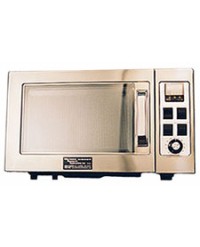
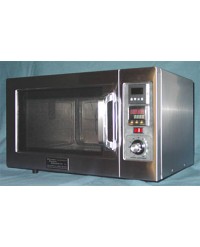
- Compact. Cavity is 13" Long x 13" Deep x 8 1/16" High
- Outer dimensions: 20 1/8" Long x 15" Deep x 12" High
- Stainless steel cavity and wrapper
- Variable power. Levels from 25 to 825 watts
- Microwaves turn on instantly. No 2-3 second delay.
- Can be operated in manual or automatic mode
- Removable thermal probe for easy field replacement
- Variety of thermal probes available
- Cavity air removed through chemically resistant duct.
- Fresh air pulled into cavity via fan
- Microwave compatible feedthrough for 1/4" ID tubing
Microwaves come with 8 feet of chemical resistant exhaust duct, 2 clamps for the exhaust duct, CAP baseline test for microwave and temperature reproducibility and tips on microwave usage. Learn More
The LBP111RS is essentially the same microwave as the
LBP111 except with different controls.
- Compact. Cavity is 13" Long x 13" Deep x 8 1/16" High
- Outer dimensions: 20 1/8" Long x 15" Deep x 12" High
- Stainless steel cavity and wrapper
- Variable power. Levels from 25 to 825 watts
- Microwaves turn on instantly. No 2-3 second delay.
- Can be operated in manual or automatic mode
- Removable thermal probe for easy field replacement
- Variety of thermal probes available
- Cavity air removed through chemically resistant duct.
- Fresh air pulled into cavity via fan
- Microwave compatible feedthrough for 1/4" ID tubing
Microwaves come with 8 feet of chemical resistant exhaust duct, 2 clamps for the exhaust duct, CAP baseline test for microwave and temperature reproducibility, discount for next years CAP microwave test kit and tips on microwave usage. Learn More