For emergency flushing of eyes with sterile ophthalmic wash liquid from squeeze bottle. Molded bracket supports the bottle and discharge tube. Spray cup at top of bottle is placed against the affected eye and bottle is squeezed repeatedly, directing a gently stream through a perforated plate. Molded of high-impact, green plastic, readily identifiable in emergency situations. Clear, molded dust cover keeps eye cup free of contamination, yet is easily released in emergency situations. Wall-mountable station comes complete with eyewash bottle, mirror and instructions. Ophthalmic wash solution sold separately. Overall size: 44 cm x 38 cm x 9 cm , reinforced for wall hanging. 480 ml capacity.
Effective, safe and fast method to contain hazardous liquid spills involving acids (except hydrofluoric acid), caustics, solvents or oils. Pillows are filled with an amorphous silicate absorbent enclosed in a chemical resistant, porous polyolefin pillow - eliminates need for loose, messy absorbents. Superior absorbing properties - pillows absorb their capacity within seconds after making contact with the spill. Once liquid spill is contained, simply dispose of pillow according to appropriate safety guidelines.
Comes in 250 ml, 1 L, and 4 L absorbing capacities
Provides safe handling and storage of hazardous liquids. Molded of opaque red chemically resistant polyethylene. Threaded top and bottom of jacket unscrew to insert 4 liter or 1 gallon bottle then screw together tightly for safety closure. Bottle cap remains exposed, allowing easy pouring. Acts as a shock absorber to help prevent breakage due to minor jolts, bumps or falls. Provides protection should bottle break; hazardous contents and broken glass are contained within jacket. Protects solvents from degradation by light due to jacket's opacity.
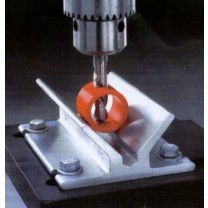
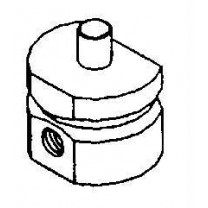
Center It is a tool for drilling pipe and other round objects. Center It is made specifically for use in a drill press. The 7/16" groove with a 118 degree angle lets you bottom drill bit to center v-block. The 5 " long, 4" wide V-block bolts to the drill press table and enables the drilling of round pieces parallel and centered. This allows you to drill any size of pipe and wood dowels.
The grooves on the outer sides eliminate slippage while holding pipes, etc., for sawing on job sites or other applications. To use, simply place Center It on the drill press table, run the bit down (with motor off) to hold the jig centered on the bit, then bolt the jig to press table. No clamping of the tube is necessary since the angled flats of the jig hold it centered. Holes will automatically be centered on the tube with no center-punching necessary. If tubing is too large to drill in a single operation it can simply be turned over.
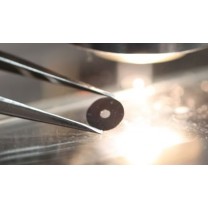
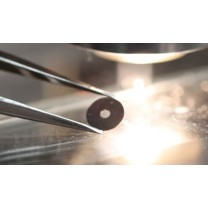
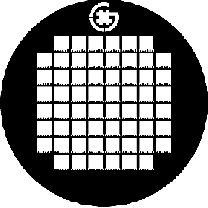
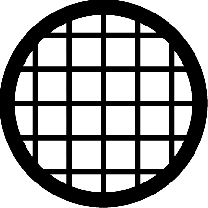
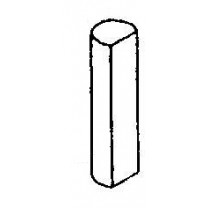
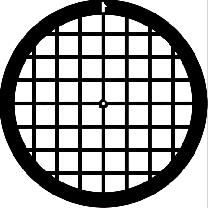
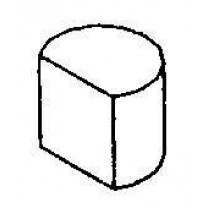
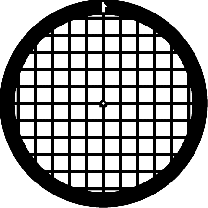
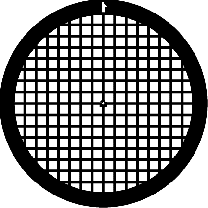
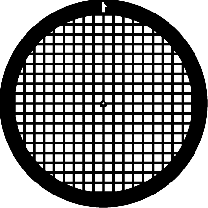
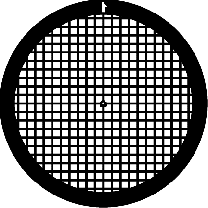
Each of the 60 square grids is identified using a base two binary numbering system. The six binary number symbols appear on the bottom grid bars along the horizontal axis. Zero is represented by a short pillar and one by a longer pillar.
The second image is an enlarged view of grid square #9 - a long pillar at the extreme right represents decimal 1 and a long pillar fourth from the right represents a decimal 8.
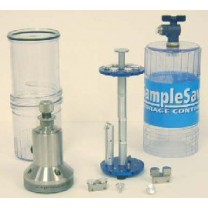
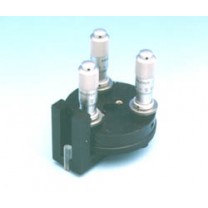
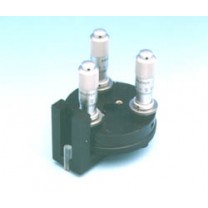
The LEBSD (Electron Backscatter Diffraction) Specimen Polishing Kit is based on the Model L150 micrometer controlled lapping fixture. Two mounting blocks are included to hold a 1/8" diameter pin SEM mount for plan view preparation of a Tripod Polisher SEM mount for XSEM preparation. The stubs are secured into the block with a set screw prior to loading into the lapping fixture. The kit includes a SampleSaver FIB storage container and two tier locking rack, and pin adapters for holding the L150 mounts. A pre-tilt EBSD specimen stage is included with three height segments. The low profile mount fits most SEM load locks and can be stored in the Sample Saver without removal from the pre-tilt holder.
Special Features
A relatively simple and inexpensive method for mechanically polishing and mounting EBSD specimens on an SEM stub, allowing quick transfer without dismounting a prepared sample.
Pre-Tilt EBSD specimen stage keeps sample at a fixed angle of 70o or the complementary angle of 20o in the chamber.
The process utilizes conventional, easily available, precision abrasives and is compatible with other sample preparation equipment and consumables.
The Model L150 Lapping Fixture can be utilized for other routine parallel and angled polishing processes without modification. Up to 1.25" diameter mounting blocks are available.
A low force Model L150L lapping fixture is available as an option.
Complete process recipes, consumable supplies, and other accessories are available and include hand lapping tray, lapping and polishing machines, hot plate/cooling tray and sample mounting devices.
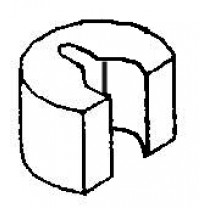
The most commonly used bracket. It has a slot through the front to accommodate the Pyrex inserts for wedge polishing, the SEM stub mount, as well as the L59002 Wedge Polishing Mount.
Designed specifically for doing the first side polishing of TEM specimens. However, the plain L bracket can be used for polishing SEM cross sections if additional mounting prior to microscope viewing is to be done.
Used with L03090 or L03067 and clamps the small pyrex rods into the L590. The clamp is anodized aluminum and squeezes against the pyrex rod, holding it in place. Included at no charge with the purchase of the BiPod Polisher.
Similar in function to the Pyrex insert. Specimens are mounted to the rod for wedge polishing applications. Included at no charge with the purchase of the BiPod Polisher.
This insert is a glass stub used for TEM polishing of specimens. It is used in conjunction with the slotted L bracket and is used for wedge polishing applications. Not included with the purchase of the BiPod Polisher.
The SEM stub mount is designed specifically for mounting specimens for SEM polishing. It fits directly into the stage of most standard SEM stages and eliminates the need for remounting the specimen prior to SEM observation. Included at no charge with the purchase of the BiPod Polisher.
A large square aluminum block which is designed to be used on a hot plate. The block provides a stable platform onto which the L brackets can be placed and heated to the proper temperature for mounting specimens.
Designed to hold the Tripod Polisher upside down to allow for viewing the specimen under a dissecting microscope. The stand can also be used as a storage device in between processing steps.